
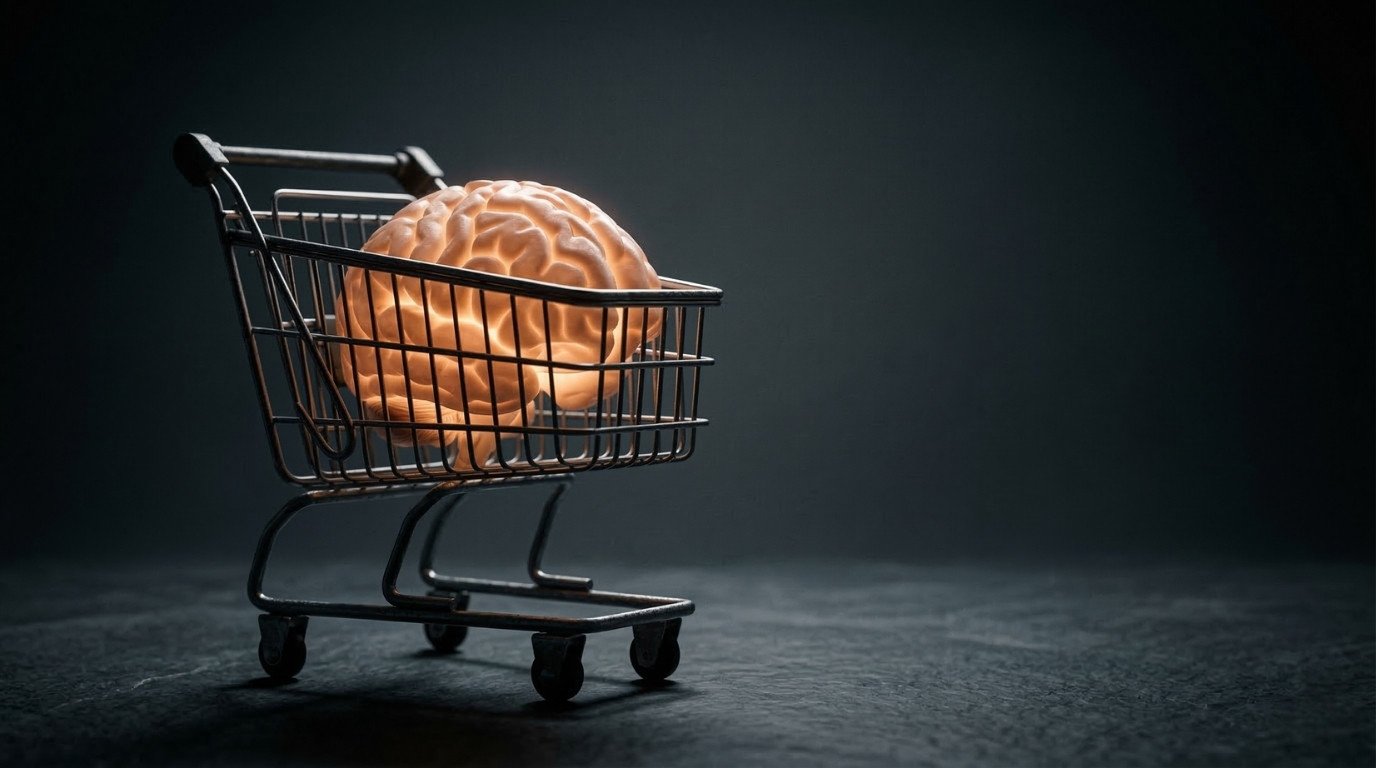
7 Psychological Mistakes You Should Never Make While Grocery Shopping
You walk into the grocery store for bread, milk, and eggs. You walk out with a cart full of things you didn't plan to buy — and a receipt that makes you wince.
Sound familiar? You're not alone, and you're not weak-willed. You're human.
Research consistently shows that over 60% of grocery purchases are unplanned. That's not because people are careless. It's because the grocery store is an environment specifically engineered to exploit predictable quirks in human psychology — and most of us have no idea we're being manipulated.
But here's the twist: the stores aren't entirely to blame. Many of the biggest spending mistakes happen because of psychological patterns you bring with you — habits of thinking and decision-making that quietly work against your budget and your health goals.
In this article, you'll learn the 7 most common psychological mistakes shoppers make, why your brain falls for them every time, and exactly what you can do to stop.
1. Shopping Without a List (And Trusting Your Memory)
This is the single most expensive mistake you can make before you even enter the store.
When you shop without a list, you hand control over to a part of your brain that is not good at rational planning — your impulse-driven, reward-seeking limbic system. Your prefrontal cortex, the seat of logic and self-control, gets overridden the moment you see a colorful display or smell fresh-baked bread.
Studies show that shoppers without grocery lists make significantly more unplanned purchases and consistently spend more than those who plan ahead. One analysis found that list shoppers were also far more likely to stick to healthier food choices, because they had already made deliberate decisions at home — before hunger and marketing pressure could interfere.
The fix is simple but powerful: write your list before you're hungry, and organize it by store section so you move efficiently and don't wander. Wandering is expensive.
Pro tip: Review your fridge and pantry before writing the list. This eliminates duplicate purchases — another costly memory error.
2. Shopping on an Empty Stomach
This mistake is so well-documented it has become almost cliché — and yet millions of people still do it every week.
When you're hungry, your brain releases ghrelin, a hormone that doesn't just make your stomach growl. Ghrelin actively shifts your attention toward high-calorie, high-reward foods and impairs the rational decision-making processes that would otherwise keep you on budget.
A Cornell University study found that people who shopped hungry bought significantly more high-calorie food items compared to those who had eaten beforehand. More importantly, hunger doesn't just affect what you buy — it affects how much you're willing to pay. Hungry shoppers show reduced price sensitivity, meaning a $6 impulse snack feels more justified when your stomach is growling.
The psychological mechanism here is called visceral influence: your current physical state hijacks your future-oriented decision-making. You stop thinking about what you need for the week and start thinking about what your body wants right now.
The fix: Eat a small snack — even a handful of nuts — before you shop. If that's not possible, drink a large glass of water. Research shows that even mild satiation helps restore rational decision-making.
3. Falling for the Anchoring Trap
You see a sign: "Was $8.99 — Now $5.49!"
Your brain lights up. You feel like you're winning. You reach for the product — even if you didn't need it, even if you'd never normally pay $5.49 for it, and even if you have no idea whether $8.99 was ever the real price.
This is the anchoring effect, one of the most powerful and well-researched cognitive biases in consumer psychology. First described by Nobel Prize-winning psychologists Daniel Kahneman and Amos Tversky, anchoring occurs when your brain latches onto the first number it sees and uses it as a reference point for all subsequent judgments.
Grocery retailers use anchoring aggressively:
- "Buy 5 for $10" (even when there's no discount for buying fewer)
- "Limit 4 per customer" (artificial scarcity makes the item seem more valuable)
- Large crossed-out prices next to "sale" prices
- Premium items placed next to ultra-premium items to make the premium item seem reasonable
Research on retail anchoring shows sales tactics using reference prices can increase purchase rates by 30–50%, even when the "original" price was inflated specifically to create the anchor.
The fix: Before adding any "deal" item to your cart, ask yourself one question: "Would I buy this at this price if there were no original price shown?" If the answer is no, put it back.
4. Letting Decision Fatigue Run the Show
The average grocery store stocks between 30,000 and 50,000 individual products. Every time you choose one over another — pasta A versus pasta B, organic versus conventional, this cereal or that one — you're spending a finite mental resource.
That resource runs out.
Decision fatigue is the psychological phenomenon where the quality of your decisions deteriorates after a long period of choosing. A landmark study by social psychologist Roy Baumeister demonstrated that mental energy for decision-making is genuinely depleted through use — and once depleted, the brain takes shortcuts.
Those shortcuts look like:
- Choosing the default option (whatever is easiest to grab)
- Choosing the most visually appealing option (bright packaging wins)
- Giving in to impulse rather than deliberating
Grocery stores exploit this deliberately by placing candy, snacks, and small indulgences at the checkout aisle — the one place you visit after you've already made dozens of small decisions and your willpower is at its lowest.
A Bangor University neuroimaging study found that shoppers showed measurably reduced activity in rational decision-making brain regions after approximately 23 minutes of shopping.
The fix: Shop early in the week and early in the day, when your mental energy is highest. Move through the store with purpose and use your list as a decision filter — if it's not on the list, the decision is already made.
5. Trusting Eye-Level Products Without Thinking
There's a saying in the retail industry: "Eye level is buy level."
The products positioned at your eye level in any given aisle are not there by accident. Brands pay significant slotting fees — essentially rent — to grocery retailers for premium shelf placement. Eye-level and reach-level shelves are the most valuable real estate in a store.
What's on the lower shelves? Often the store-brand or budget equivalent of the exact same product — sometimes made by the same manufacturer, just without the premium packaging and marketing spend.
Studies in retail psychology confirm that products at eye level sell dramatically more than identical or equivalent products on lower or higher shelves — with some research showing a 35% sales difference based purely on shelf height.
This isn't a conspiracy. It's economics. But it costs you money if you shop on autopilot.
The fix: Make it a habit to glance at the lower shelves in any aisle before putting something in your cart. Compare the unit price (price per ounce or per unit) rather than the package price. Most stores display unit pricing on the shelf label — use it.
6. Succumbing to the Sale Illusion
Sales feel good. They trigger a genuine neurological reward response. When you believe you're getting a deal, your brain releases a small hit of dopamine — the same neurotransmitter involved in other forms of reward-seeking behavior.
The problem is that a sale is only a good deal if you were going to buy the item anyway.
Buying three boxes of cereal because they're 40% off, when you only needed one, is not saving 40%. It's spending 200% of what you intended to spend.
This trap is driven by loss aversion, another principle from Kahneman and Tversky's research. Loss aversion describes the fact that humans feel the pain of losing something roughly twice as intensely as they feel the pleasure of gaining something of equivalent value. A "sale ending soon" triggers the fear of loss — the fear of missing out on the deal — more powerfully than the rational calculation of whether you actually need the item.
Retailers amplify this with:
- Limited-time offers ("Today only!")
- Quantity limits ("Limit 6 per customer" — making you feel you should buy 6)
- Loss-framed messaging ("Don't miss out")
Research from the Journal of Marketing found that promotional framing can increase purchase likelihood by up to 60%, even when the product itself hasn't changed.
The fix: Before you reach for a sale item not on your list, pause for 10 seconds. Ask: "Did I need this before I saw the sale sign?" If no, it's the store's psychology winning, not you.
7. Shopping While Distracted
Talking on the phone, scrolling through messages, managing restless kids, listening to a podcast with both earbuds in — these all significantly impair your shopping decision-making in ways most people underestimate.
Distraction reduces cognitive load capacity, meaning your brain has fewer resources available for deliberate, rational evaluation of products. When you're distracted, you're more likely to grab familiar brands (habit), respond to packaging cues (impulse), and skip the price comparison you would otherwise make.
Research published in the Journal of Consumer Research found that shoppers in cognitively demanding situations — those juggling mental tasks while shopping — made significantly more unplanned purchases and were less sensitive to price differences than focused shoppers.
Shopping with children introduces a specific version of this challenge. Children are expert at leveraging what psychologists call the nag factor — and studies show that children's requests are responsible for a meaningful percentage of unplanned grocery purchases. This isn't a parenting failure; it's a predictable outcome of shopping in an environment specifically designed to capture children's attention (with colorful packaging, cartoon characters, and low shelf placement of sweets and snacks).
The fix: Shop solo when possible. If you must bring children, establish clear expectations before entering the store. Keep one earbud out. Put your phone in your pocket. The grocery store rewards your full attention with a lower bill.
Conclusion
The grocery store is not a neutral environment. It is a carefully designed psychological landscape built to maximize how much you spend — and it works, to the tune of billions of dollars in unplanned purchases every year.
But now you know the 7 psychological mistakes that make the store's job easier:
- No list — your impulse brain takes over
- Shopping hungry — ghrelin hijacks your judgment
- Anchoring — fake reference prices manipulate your sense of value
- Decision fatigue — your willpower is depleted long before checkout
- Eye-level autopilot — premium shelf placement costs you money
- Sale illusion — loss aversion makes "deals" feel urgent
- Distraction — divided attention means less deliberate spending
The good news: awareness is the most powerful antidote to psychological manipulation. You don't need perfect willpower. You need a list, a snack before you go, and the habit of pausing for 10 seconds before adding anything unplanned to your cart.
Small behavioral shifts, backed by science, add up to hundreds of dollars saved per year — and a cart that actually reflects what you intended to buy.
Frequently Asked Questions
Is it really bad to shop without a list?
Yes. Research shows shoppers without lists spend significantly more and make far more unplanned purchases. A written list keeps your prefrontal cortex in charge and removes in-store temptation from the decision process.
How much does hunger affect grocery spending?
Studies show that hungry shoppers buy more high-calorie, impulsive items and spend measurably more overall. Even mild hunger is enough to skew your decisions — a small snack beforehand can make a real difference.
What is decision fatigue in grocery shopping?
Decision fatigue is the mental exhaustion that sets in after making many small choices. After 20+ minutes in a store, your brain switches from rational to emotional decision-making, making you far more vulnerable to impulse buys — especially at the checkout.
Does store music really affect how much I spend?
Yes. Slower background music has been shown to slow shoppers down, increasing time spent in the store and the total amount purchased. Stores use sound, lighting, and scent deliberately to influence behavior.
How can I avoid cognitive biases while grocery shopping?
Shop with a written list, eat before you go, set a firm budget, shop early in the week when you're mentally fresh, and pause for 10 seconds before adding any unplanned item to your cart. These small habits interrupt automatic bias-driven decisions.
0 Comments
No comments yet. Be the first to share your thoughts!
Leave a Comment
All fields are required.